
Galvanised, Painted or Powder-Coated: What External Steel Actually Survives Outdoors in Singapore
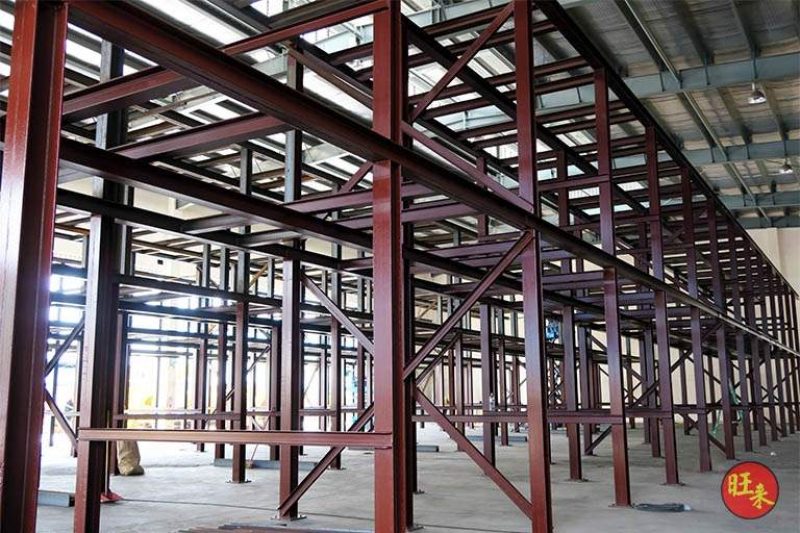
The complaint always arrives the same way. The gate, the awning frame or the external staircase looked perfect for two years. Then a brown line appeared along a weld, a bubble lifted at the bottom of a post, and within a season there was a rust streak running down the wall behind it. Nobody did anything wrong to it. It simply sat outside in Singapore.
External steel on a landed house does not fail because the wrong paint colour was chosen. It fails at six specific places, for reasons that were decided in the workshop long before anything was delivered to site. This is what actually governs how long it lasts, and what to put in a quotation so you are comparing the same thing.
Three coatings, doing three different jobs
Almost every argument about external steel comes from treating these as interchangeable finishes. They are not the same kind of protection at all.
Paint and powder coating are barriers. They work by keeping water and air off the steel. They do that very well until the film is broken. Once there is a scratch, a chip or a drilled hole that reaches bare steel, corrosion starts at that point and then works sideways underneath the coating, lifting it as it goes. That is why a powder-coated gate can look immaculate everywhere except one spot, and why that one spot keeps growing no matter how often it is touched up.
Hot-dip galvanising is sacrificial. The component is dipped in molten zinc, and the zinc bonds to the steel. If the surface is scratched, the zinc around the scratch protects the exposed steel electrochemically rather than simply covering it. Small breaks in the coating do not become the start of a spreading failure the way they do with a pure barrier. It is not pretty in the conventional sense — it has that mottled grey finish and it weathers to a duller grey — but it behaves completely differently when damaged.
A duplex system is both. Galvanise first, then paint or powder coat over the zinc. You get the appearance of a coated finish and the sacrificial backup underneath it. It costs more, it takes longer, and it only works if the zinc is properly prepared before the topcoat goes on. Done without that preparation, the topcoat peels off the zinc in sheets and you have paid for the worst of both.
The six places external steel actually fails
It is almost never the middle of a member. It is the details:
- Welds. Heat, spatter and slag, and a surface no coating grips as well as it grips clean steel. If welds have not been ground and cleaned before coating, that is where the first line of rust appears.
- Cut ends. A galvanised or pre-coated section cut on site has bare steel on the cut face. Uncoated, that face is the seed.
- Drilled holes and fixings. Every hole drilled after coating exposes steel around its edge, and every bolt through it holds moisture in the gap.
- The bottom of posts. Where a post meets a slab, a driveway or a planter, water sits and dries slowly. Constant wet-and-dry at one line is far harder on steel than continuous rain.
- The inside of hollow sections. The single biggest and least visible one. See below.
- Contact with other metals. Aluminium or stainless fixings hard against carbon steel, in a wet environment, corrode faster than either would alone. Separate them or specify the fixings to match.
The inside of a hollow section is the one that kills it
Most decorative and structural steel on a house is hollow section — square or rectangular tube. On a painted or powder-coated job, only the outside is coated. The inside is bare mild steel.
Water gets in. It gets in through an unsealed end, a bolt hole, a joint that was never seal-welded, or simply as condensation because the tube is cooler than the humid air around it at night. Once inside, it does not leave. The section rusts from the inside out, and the first thing anybody sees is a bulge or a streak years later, at which point the wall thickness has already gone.
Three things prevent it, and all three belong in the specification rather than in a conversation on site:
- Seal the ends — properly capped and seal-welded, not a cap tacked on at two corners.
- Drain the low point — a small drain hole at the lowest point of any member that could take water, so anything that gets in has a way out.
- Galvanise inside and out where it matters. Hot-dip galvanising coats the inside of a hollow section as well, because the whole piece goes into the bath. That is the practical advantage that no amount of spray painting reproduces.
Galvanising has real constraints, and they change the design
This is where the workshop reality bites, and it is the part that is rarely explained to an owner before a design is fixed.
It happens in a bath, so size matters. A component has to fit in the galvanising kettle. Long or awkward assemblies may have to be split into pieces and bolted together on site, which changes the joint design and the appearance.
The process needs vent and drain holes. Molten zinc has to flow in and air has to get out, so hollow sections need holes in specific places. Those holes are a design decision, not an afterthought — they can be placed where they will not be seen, but only if somebody decides that early.
Heat can distort thin material. Slender or thin-walled fabrications can move in the bath. That is a reason to detail heavier sections for anything that has to stay dead straight.
You cannot weld after galvanising and pretend nothing happened. A site weld burns the zinc off around the joint. It can be repaired with a zinc-rich coating, and that repair is genuinely useful, but it is not the same as the dipped coating. Which is why the honest sequence for external steel is: fabricate complete in the workshop, galvanise, then bolt on site. Every site weld is a future rust spot with a known address. It is one of the reasons we keep metalwork in-house rather than subcontracting it, which we set out in why we do not outsource metalwork.
Where each one belongs on a house
Fully exposed and structural — an external staircase, a car porch or awning frame, a pergola, a roof-level canopy. Galvanise, and duplex it if the appearance matters. These are the ones where a failure is expensive to put right because access is difficult and the element is load-carrying. The same logic applies to anything supporting solar, discussed in solar on a canopy or car porch.
Exposed and decorative — gates, railings, screens, letterbox frames. This is where powder coating alone is most common and where the failures show up first, because these are the elements people touch, knock, drill and lock. Duplex is worth the difference here more often than not, for reasons that sit alongside everything else in gate fabrication for landed homes.
Sheltered but outside — louvre screens, sun-shading frames, balcony structures under an overhang. Better than fully exposed, but not indoors: driving rain reaches them and salt-laden air certainly does. The shading elements themselves are covered in balconies, awnings and louvre screens.
Internal — an internal staircase or a balustrade inside the house. Powder coating over properly prepared steel is entirely reasonable. This is the one place a pure barrier is not a compromise, and internal structural work is covered in custom staircase design.
What about stainless steel?
It is not automatically the answer, and it is not maintenance-free. Stainless comes in different grades with genuinely different resistance, and the choice matters much more on a house near the coast than one inland. The common surface staining that appears on stainless railings by the sea is not the material failing structurally — it is a surface effect — but it looks like rust to everybody who sees it, and it needs washing to keep it off. If stainless is being proposed, ask which grade, and ask why that grade.
Put these five lines in the quotation
This is the practical part. A quotation that says "powder coated" tells you almost nothing. Ask for:
- The coating system, named in full — hot-dip galvanised, powder coated, or galvanised and then coated, and what preparation happens before each stage.
- Whether hollow sections are sealed and drained, and where the drain holes go.
- Whether any welding will be done on site, and if so, how those welds will be prepared and coated after the fact.
- Who repairs transport and installation damage, and with what. Steel gets scratched between the workshop and the wall; the question is whether that is somebody's responsibility in writing.
- What the fixings are made of, and whether they are compatible with the steel they are going into.
Two quotations that look a thousand dollars apart usually differ on exactly these lines, and the gap is not margin — it is the number of years before you are having this conversation again.
And then wash it
The least glamorous item on the list and the one that makes the most difference. Salt, dust and organic debris hold moisture against a surface. Steelwork that gets rinsed down occasionally — with plain water, particularly on the sheltered faces the rain never reaches — lasts materially longer than identical steelwork that never does. Sheltered surfaces are the ones to watch, because they collect deposits and get no natural washing at all.
The short version
- Paint and powder are barriers; galvanising is sacrificial; duplex is both, and costs more.
- Steel fails at welds, cut ends, drilled holes, post bases, inside hollow sections and where it touches other metals.
- The inside of a hollow section is the failure nobody sees until the wall thickness has gone. Seal it, drain it, or galvanise it.
- Galvanising is done in a bath, which constrains size, needs vent holes and rules out casual site welding.
- Fabricate complete, galvanise, then bolt on site. Every site weld is a future rust spot.
- Ask for the coating system named in full, and for the five lines above, before comparing prices.
- Rinse it down, especially the faces the rain never reaches.
If you are specifying external steelwork on a landed house, or you have steelwork that has started to rust and want to know whether it can be saved, WhatsApp us on 9107 2601 — tell us what the steelwork is, roughly how old it is and how exposed it sits, and we will tell you what is worth doing. Wong Lye holds a BCA General Builder Class 2 (GB2) licence and fabricates its own metalwork; you can see the range of that work on our metal works page.
Also worth reading: for the walls the steel is fixed to, see Repainting the Outside of a Landed House in Singapore: What to Fix Before the First Coat Goes On.
Also worth reading: for railings on stairs, lofts and balconies, see Railing for a Stair or Loft Edge on a Landed House in Singapore: Mesh, Bars, Glass or Timber, and What Each Asks of You After Handover.