
Taking Over a Stalled A&A Project in Singapore: What a New Builder Checks First
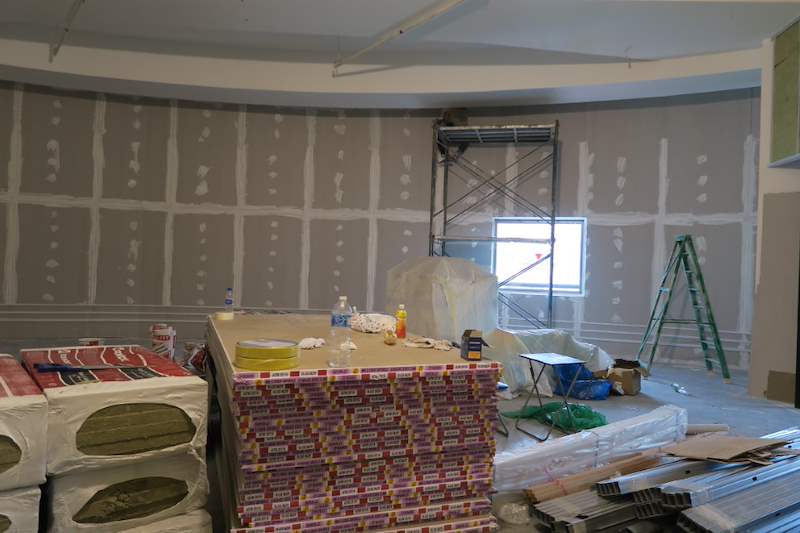
A stalled project does not look like a disaster from the road. The hoarding is still up, the structure is standing, and from outside it could pass for a job that is simply between trades. It is only when you walk in and realise nobody has been on site for six weeks that the position becomes clear.
We get called to these. Sometimes the previous contractor has walked. Sometimes he has been asked to leave. Sometimes he is still nominally on the job but has stopped turning up because his money ran out somewhere else. The owner's question is always the same, and it is always asked in the same slightly embarrassed way: can you finish it, and what is it going to cost?
The honest answer is that nobody can price a half-built house from photographs, and you should be wary of anyone who offers to. What follows is what we actually check before we will quote on one — and, more useful to you today, what you should be gathering now whether you end up appointing us or somebody else entirely.
This is a paperwork problem before it is a building problem
Owners in this position almost always start by looking for a builder. That is the wrong first call, and it costs weeks.
Your A&A was approved on the strength of a submission made by a Qualified Person — the architect or engineer who put their name to the drawings and carries professional responsibility for them. The QP does not disappear when the contractor does. The approvals, the drawings and the record of what was supposed to be built all sit with them, and until you have spoken to your QP you do not actually know what you own.
Three things need to be established there before a builder is any use to you:
- Is the QP still appointed? If their fees stopped being paid when everything else stopped, the appointment may have lapsed. That is recoverable, but it has to be dealt with first.
- Are the approvals still valid? Permits are not open-ended. A job that has sat still for a long time may need something re-lodged, and that is a lead time, not a phone call.
- Does what was built match what was approved? This is the one that catches people. A departing contractor who took shortcuts leaves them behind in the concrete, and the QP is the only person who can tell you whether the structure as built is the structure that was signed off.
We have written separately about what a QP actually does on a landed A&A, and it is worth reading before that first conversation so you know what to ask for.
The builder named on the permit
Appointing a replacement is not a private arrangement between you and whoever quotes cheapest. The builder carrying out the works is a matter of record, and the change is made through your QP, not by handshake on site.
It also means the incoming builder has to hold the right registration for the work. Wong Lye is registered with BCA as a General Builder Class 2 (GB2). Ask any builder you are considering for theirs, and check it is current rather than taking the letterhead at face value. On a job that has already gone wrong once, this is not the moment to be relaxed about credentials.
What we check on site
Whether the structure can be built on at all
This is the question that decides everything else. A new builder who continues on top of someone else's structure takes responsibility for what he builds — and, in practice, gets blamed for anything that moves afterwards regardless of who poured it.
So the first walk is not about finishes. It is beams, columns, slab edges, the connections between new work and the existing house, and anything that looks like it was improvised. Where there is doubt, the answer is a structural review by the QP with opening-up where needed, not an opinion from a builder standing in the rain.
What is hidden, and whether anyone recorded it
The expensive unknowns on a stalled job are all things you cannot see:
- Reinforcement. Was the steel inspected before the pour, and is there a record? Concrete keeps its secrets very well.
- Waterproofing. Was it applied, was it tested, and was the test witnessed? A membrane that failed its ponding test and was covered anyway will not announce itself until the ceiling below is stained.
- Concealed services. Conduits and pipes buried in walls and screeds by a contractor who has since left, with no as-built marking, become a demolition risk for every trade that follows.
If the previous contractor kept a site diary and an inspection photo record, ask for it. You are entitled to the records for work you paid for, and their absence is itself information about how the job was run.
How long it has been standing open
An A&A that stopped with the roof off, or with openings unglazed, has been taking weather the whole time it has been idle. Timber, plasterboard, insulation and anything with a steel fixing in it all have a shelf life once they are wet, and the damage is usually worse at the bottom of walls and in ceiling voids where nobody looks.
This is the item owners most often argue about, because from the middle of the room it all looks fine. It relates directly to what wet weather actually does to a landed site, and on a stalled job you have had months of it instead of days.
The money question nobody enjoys
There are two separate numbers here and they get confused constantly.
The first is what you have paid. The second is what is actually standing on your site. On a job that collapsed, these are almost never the same, and the gap is the reason it collapsed. A contractor who front-loads his billing runs out of money to finish with, which is precisely the failure you are now looking at.
Before any new builder prices the remaining work, somebody has to value what is genuinely complete — not what the last progress claim said was complete. That is a measurement exercise, and it is worth having the QP or a quantity surveyor do it rather than accepting either the old contractor's version or the new one's.
It also changes what you should look for in the next contract. We bill on progressive milestones tied to work in place for exactly this reason: when the payment is attached to something you can stand in front of and see, the job cannot get financially ahead of itself the way this one did.
What any honest builder will refuse to do
We will not warrant somebody else's work, and neither should anyone else. If a builder tells you he will stand behind the whole house including the parts he did not build, he is either not thinking about it or he is telling you what you want to hear — and on a rescue job, the second one is more dangerous than the first.
What can be done is to draw a clear line: this is the work we are taking on, this is what we inspected and accepted, and this is what remains yours or the previous contractor's. That line should be written down before anyone starts, with photographs, because in eighteen months nobody will remember where it was.
What to gather before you call anyone
You can do all of this today, and it will save you a fortnight:
- The approved drawings and the permit, from your QP
- Your contract with the previous contractor, including the payment schedule
- Every progress claim and every payment record
- Any inspection records, test results and site photographs
- Delivery orders for materials you have already paid for — some of them may still be on site, and some may not
- The QP's current appointment status, in writing
- Written confirmation of where things stand with the previous contractor, because a builder who has not been formally terminated is still, on paper, your builder
That last one matters more than it sounds. Bringing a second contractor onto a site where the first has not been properly released is how an unfinished house turns into a dispute with two contractors in it.
What it costs to take one over
We do not publish a figure for this and we will not guess one, because the honest range on a rescue job is enormous. Two houses at the same stage can be weeks apart in remedial work depending entirely on what is hidden in the structure.
What we can tell you is what the quote depends on: the structural review, the opening-up needed to see the hidden work, the weather damage, and the size of the gap between what has been paid and what is standing. Until those four are known, any number is theatre.
If you are sitting on a stopped job, bring us the documents above and we will walk it with you.
Message us on WhatsApp about a stalled A&A project, or read more about the A&A and reconstruction work we take on.
Why a builder warrants only what he built, and what that means once a house is handed over, is set out in what a landed-home warranty covers after handover.
If you are now choosing a builder to take over, the same checks apply to the second builder as to the first. They are set out in choosing an A&A contractor for a landed house.