
Your Neighbour Is Building Next Door: What You Can Ask For, and What You Cannot
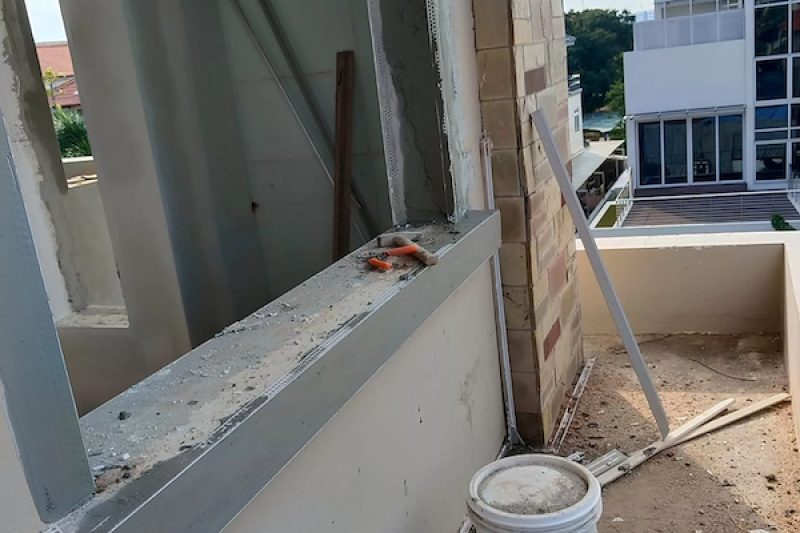
A hoarding goes up next door, a lorry arrives, and the house beside yours is about to become a building site for the next year or more. Most of what gets written about landed building works is written for the owner doing the building. This is written for the person living next to it.
The useful thing to understand early is that your position is strong on process and weak on the development itself. Knowing which is which saves a great deal of wasted energy.
Start with the one that matters most: a dilapidation survey
If you do nothing else on this page, do this one, and do it before works start.
A dilapidation survey is a documented record of the existing condition of your house — photographs and notes of every existing crack, every settlement mark, every hairline in the screed — made and dated before the neighbouring works begin.
Its value is simple. If cracking appears in your house six months into their piling or excavation, the argument becomes whether it was already there. With a pre-works survey, that question has an answer. Without one, it is your recollection against theirs, and recollection loses.
Here is the part owners are usually surprised by: the neighbour's builder often wants this too. A survey protects them just as much, because it stops them being blamed for damage that pre-dated their arrival. So the request is far less confrontational than it feels. Ask early, ask in writing, and ask for a copy of the record for yourself.
Our note on dilapidation surveys and neighbour cracks covers what a proper one contains.
Access over your land is yours to grant or refuse
At some point in a tight landed plot, someone may need something from your side of the boundary — scaffold footed on your ground, a crane swinging over your roof, a wall tie, or simply a man with a ladder.
None of that is theirs by default. If you are asked, you can say no, and more usefully you can say yes with conditions. Sensible conditions to put in writing before you agree:
- the dates and hours the access applies to, and when it ends
- exactly what is being placed on or over your land
- who reinstates your ground, planting, fencing or finishes afterwards, and to what standard
- confirmation that their contractor's insurance covers the work being done over your property
- a named person to contact, with a phone number, rather than "the site"
Granting access reasonably is usually the right call — refusing everything tends to make a long year longer for both households — but grant it deliberately and on paper, not by shrugging when someone is already up a ladder.
What to watch for, in the order it usually happens
- Demolition. Dust and debris crossing the boundary. Hoarding and screening should keep the work on their side. Take dated photographs of your compound before it starts.
- Excavation and piling. This is the phase most likely to affect your house — ground movement and vibration. Ask whether monitoring is being carried out and by whom. Our note on excavation work on landed homes explains what is going on down there.
- Water and silt. An open excavation next door changes where rain goes. Silt washing into your compound or drain is a common and fixable complaint — raise it early, because it is far easier to fix while the site is still set up than afterwards.
- Structure going up. Scaffold, oversail, and the point where anything touching a shared wall matters. For terrace and semi-detached houses, our note on party walls and boundaries is the relevant reading.
Who you are actually dealing with
"The neighbour" is rarely the right person to call about a technical problem, and the man at the gate may not be either. On a properly run landed project there are three parties worth knowing about:
- The builder — the company responsible for the site, its safety and its behaviour.
- The Qualified Person — the professional who designed and supervises the structural works, and who carries responsibility for the submissions. Our note on what a QP does on a landed project covers the role.
- The owner — your actual neighbour, who has to live beside you long after the scaffold is gone.
In practice, a calm early conversation with the owner plus one named contact at the builder solves most of what arises. Escalating to the authorities first, before anyone has had a chance to fix anything, tends to harden a relationship you will still be in for a decade.
What you cannot ask for
This is the half that saves people months, and it is worth being direct about it.
You generally cannot stop an approved development because you would rather it did not happen. If your neighbour's plans have been approved, then the height, the setback, the footprint and the shape of the house are settled matters and objecting to them is not a productive use of your year. The envelope of what may be built on a landed plot is governed by the planning rules that apply to that plot — our note on envelope controls covers what those normally allow.
Nor can you reasonably ask for zero disruption. Building works are noisy and dusty, and a project of any size will be inconvenient. What you can legitimately expect is that the disruption stays within the permitted working hours, stays on their side of the boundary, and does not damage your property.
Keeping your requests inside that line is also what makes them effective. A neighbour who raises three specific, reasonable, documented points gets them dealt with. A neighbour who objects to everything gets filed under "that one", and the specific points get lost with the rest.
If damage does appear
Cracking in a house next to building works is not automatically caused by those works. Singapore houses move for their own reasons, and a hairline in a plaster finish is a very different thing from a crack running through a structural element. That is exactly why the pre-works survey matters so much: it lets the question be answered rather than argued.
If you do see something, the sequence that works is:
- Photograph it with a date and something for scale. A coin or a ruler beside the crack is worth more than a wide shot of a wall.
- Report it once, in writing, to your named contact. Keep it factual — where it is, when you first noticed it, what the site was doing at the time.
- Do not patch it yet. Filling a crack before anyone has looked at it removes the evidence and makes the movement harder to assess.
- Watch whether it grows. A crack that is stable is a different problem from one that is opening week by week, and photographs taken a fortnight apart tell you which you have.
If it turns out to be structural rather than cosmetic, that is the point to get your own independent opinion rather than relying solely on the assessment of the people whose works are being questioned. Our note on structural cracks and when you need an engineer covers how that distinction is normally made.
A short checklist
- Ask for a dilapidation survey of your house, in writing, before works start — and keep a copy.
- Photograph your own house and compound, dated, before the hoarding goes up.
- Get one named contact with a phone number at the builder.
- Put any access over your land in writing, with dates, scope, reinstatement and insurance.
- Raise water, silt and vibration issues early, while the site is still set up to deal with them.
- Keep a simple dated log of anything you report and the reply you got.
If you would rather ask someone independent
If you are unsure whether what you are seeing next door is normal or worth raising, ask. We build landed houses and we are usually the ones on the other side of this conversation, which means we can tell you fairly quickly whether something is routine site untidiness or a question worth putting in writing.
Wong Lye Pte Ltd holds a BCA General Builder Class 2 (GB2) licence and works on landed reconstruction and A&A across Singapore.
Message us on WhatsApp about works next door, or read more about the A&A and reconstruction work we take on.
Related: the working hours and measured noise limits that apply to a landed build - see construction noise on a landed A&A: the hours and limits your builder must keep.