
Scratched Floor, Chipped Basin, Dented Door: Who Is Responsible for Damage in the Last Weeks of a Landed A&A
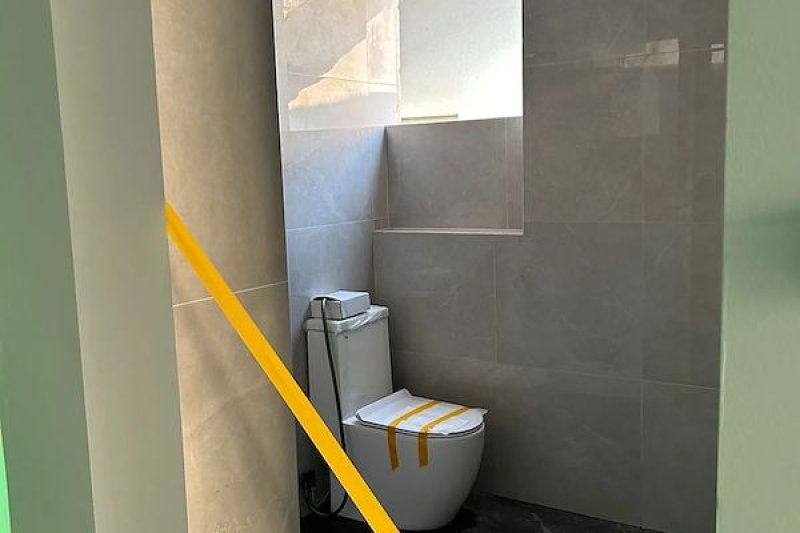
Pictured above: a bathroom on 37EW, one of our landed A&A jobs, with the tiling finished and the WC fitted, covered and taped, and a strip of caution tape across the doorway while the painting went on. That is what "finished but not yet handed over" looks like on site.
The last few weeks of a landed A&A are the weeks when a finished house is also a working site. The floors are down or about to go down, the vanity and the WC are in, the doors are hung, and painters, carpenters, flooring installers, electricians fitting lights and, if you have your own people, the aircon and curtain installers are all moving through the same rooms. A scratch on a new floor, a chip on a basin or a dent in a freshly painted door frame is not unusual at that point. What owners remember is the argument about who pays for it.
If a finished surface is damaged during the last weeks of a landed A&A, who is responsible? The honest answer is that it depends on what your contract says and on who was working there when it happened, and in most disputes the real problem is that nobody wrote either down. The rest of this post is about settling that before the last trades come in, not after.
Why the damage clusters at the end
Early in a job nothing in the house is delicate. Hacking, plastering and screed make a mess, but nothing they touch is a finished surface. As the job moves towards clean work, each trade leaves something that the next trade can mark. Our post on the finishing stage of a landed A&A covers the order the trades arrive in and why the flooring goes down late on purpose. The same logic explains where the damage happens: a finished floor, a fitted sanitary item or a painted frame has to survive every trade still to come.
What protection looks like on a real job
Protection is not a vague habit; it is physical work that someone does, keeps in place and finally takes away. The dated updates on our live jobs page for 37EW, a three-storey semi-detached house, show it in four stages:
- 15 September. Interior painting started. The handrail and balustrade were wrapped and taped, and in the toilet the tiling was done and the WC was in, covered while the painting went on.
- 17 and 22 September. Carpentry came in. The cabinet carcasses and the island base were fitted with the floor still covered for protection.
- 29 September. Window openings were wrapped in plastic sheeting ahead of the vinyl flooring, and the sanitary ware the customer had ordered was delivered and inspected on site before it was installed.
- 15 October. The porch and soffit were painted, the rooms were painted out and the new vinyl floors were protected.
Two points come out of that record. First, protection goes on a part of the house as soon as it is finished enough to be worth protecting, not at the end. Second, what is covered changes through the job: a handrail first, then a floor, then window openings, then new flooring. Someone has to keep deciding what needs covering next, and that someone should be named.
Four things to settle in writing before the last trades arrive
1. Who looks after protection, and who takes it off
Ask your builder who is responsible for putting protection down and keeping it in place in each finished room, and who removes it at the end. Do not remove it yourself on a site visit because the floor "looks fine under there". The covers are doing a job until the last dirty trade has left. The same point is made in our list of questions for the last third of a job: leave the covers on.
2. Which trades are the builder's, and which are yours
This is where most disputes start. A trade the builder appoints works under the builder's programme and supervision. A contractor or supplier you bring in yourself, whether for aircon, curtains, a built-in wardrobe from another shop or furniture delivery, arrives on your instruction. If one of them scratches the new floor, the builder will reasonably say it was not their crew. Before anyone you appointed walks into a finished room, agree in writing: who they report to on site, which rooms they may use and when, how they protect the floor, and who makes good any damage they cause. The simplest rule is that whoever caused the damage, or whoever appointed the person who caused it, puts it right. It needs to be written down before it is needed.
3. What happens to items you order yourself
On 37EW the customer-ordered sanitary ware was delivered and inspected on site before it was installed. That order matters because a chip found before installation is a fact on a delivery note, while a chip found afterwards is an argument. Whatever you order yourself, agree who receives it, who inspects it the day it arrives, and where it is stored until its trade is ready for it. A box left in a room where painters and carpenters are working is a box that can be damaged. For what to check when it arrives, see the same finishing-stage post.
4. A dated condition record, room by room
When a room is declared finished and covered, take photographs of the floor, the doors and frames, the vanity, the sanitary ware and the painted surfaces, with the date visible on the phone. Ask for a line in the site meeting notes saying which rooms are finished and covered as of that date. Then, if a mark appears later, there is a before and an after, and the discussion is about who was in the room in between, not about whether the mark was already there. Our post on the owner's role during an A&A explains how to keep these records without turning every site visit into an inspection.
Insurance is not the same as protection
Public liability insurance is in force for the whole of your project; that is stated on our A&A works page. It is a separate matter from the protection on your floors. Whether a scratched finished floor or a chipped fitting falls under any policy depends on the wording of that policy, and an owner should not assume it does. If this worry is on your mind, ask for the policy wording and ask the specific question: if one of the builder's trades damages a finished surface in my house, what is the route to getting it repaired, and how long does it take? A clear answer in writing is worth more than a general reassurance.
What goes on the handover list, and what the warranty does not cover
Anything that is damaged by the time of handover should go on the defects list, with the room, the exact spot, a photograph and a date for making good. Our room-by-room handover inspection shows how to write each item so it gets done. Damage you only notice after the list is signed is harder: the list draws a line, and a mark that appears after it has to be traced to who was in the house since.
After handover, the warranty is a different tool. Our published terms exclude damage caused by work someone else carries out after handover, including work you commission yourself. That exclusion, and what to photograph before and after another trade has been, is explained in our post on the warranty after handover on a landed home. The practical point for the last weeks is the same: the moment you bring in your own people, keep the record of who did what and when.
Questions to ask your builder before the finishing stage starts
- Who puts down and maintains protection on floors, handrails, sanitary ware and window openings, and what is the plan for each room?
- Which trades are still to come after each room is finished, and in what order?
- If I bring in my own contractors or suppliers, how are they scheduled around your trades, and who is responsible for damage they cause?
- Who receives and inspects the items I order myself, and where are they kept until they are installed?
- How will you tell me, in writing, when a room is finished and covered, so I can photograph it that day?
- If a finished surface is damaged, how is it reported, who repairs it, and by when?
The short version
Damage in the last weeks of a landed A&A is mostly a question of who was in the room, and a contract that does not say who looks after each finished area leaves that question to be argued. Settle four things before the final trades: who protects and who removes the covers, which trades are yours and which are the builder's, how items you order are received and stored, and a dated photographic record of each room when it is finished. Keep the covers on until the last dirty trade has gone.
Planning a landed A&A and want to see how this is written against your scope? WhatsApp us on 9107 2601 and tell us the house type, where the job is up to and whether you have your own contractors coming in. Wong Lye Pte Ltd holds a BCA General Builder Class 2 (GB2) licence and builds A&A works, extensions and reconstructions on landed homes. See A&A works for landed homes.
Related reading: the finishing stage of a landed A&A · taking handover of a landed build · warranty after handover
Also worth reading: a fitted folding glass door is one of the most exposed items in the last weeks of a job: Folding Glass Doors on a Landed House: What the Opening, the Track and the Threshold Must Be Ready For.
Scuffed walls are the commonest damage once the painters have gone. When to plan the touch-up visit, and how to check a wall before the final coat, is in interior painting on a landed A&A.
A door hung into a finished room is one more place for a marked floor or frame. The door under the staircase, and who protects the floor while it goes in, is in the door under the staircase of a landed house.
Items you buy yourself raise the same question before they are even fixed: who receives them, who inspects them and where they are kept. See buying your own tiles, sanitary ware and fittings for a landed A&A.
A new vinyl floor is one of the surfaces that gets marked most easily. How it is prepared, protected and uncovered is in vinyl flooring on a landed A&A.